THINGS
FY2025 AllJapanOne-point advice for the percussion section of a wind band competition piece

Every year, one point advice for the song assignment! This year too, we spoke to Toru Uematsu, principal timpani player of the NHK Symphony Orchestra! Mr. Uematsu took a deep dive into the theme song from his own perspective! There will be plenty of Uematsu Bushi this year too!
Interview: Percussion City Kawahara, Motoyama
Ⅰ Fantasy with celebratory songs and dance songs / Yoshitaka Sugiyama
The prelude is very tasteful. The xylophone mallet at the beginning doesn't need to be soft; I think it would be a nice sound if you use a regular mallet or a mallet with a wooden head.
When choosing a mallet, I think it's a good idea to choose a mallet that doesn't move in the same way as the trumpet, but one that blends in with the sound and phrase that melts the most, rather than just depending on the xylophone player.
If you have a variety of mallets, try them out one by one with other trumpet players, and have fun trying out the phrases and finding the mallet that best blends with the trumpet. However, be aware that the sound being dissolved and not being able to hear the sound are completely different things.
The rhythm of the xylophone in the second measure gradually becomes faster: the first beat is an eighth note, the second beat is a triplet, and the fourth beat is a sixteenth note.
I think a good image would be of a ball bouncing.
I think it would be wonderful if we could create music with this feeling of falling from a high place and getting faster and faster.
Just like finding a mallet, try practicing the trumpet and xylophone together. Of course, I think you should respect the rhythm written in the score, but be careful not to make it too regular and fast, as it becomes a sound effect rather than music.
From a xylophone perspective, I think you can discover that each mallet has a different feel, such as some mallets that make you want to go in a looser direction, and others that make you want to carve more accurately.
Whether the answer we all search for and arrive at is correct or incorrect, it will surely be a treasure to all of you. So please have fun searching for it.
The sleigh bell in the third measure is where the eighth note disappears.『It's Sleigh Bell! ! !』If I insist that I play too hard, everyone will be disappointed.『Huh?』That's what happens.
If you play like this, it will just be the sound of Sleigh Bell, and the people who played Sleigh Bell carefully listened to the flow that had been created by the trumpet and xylophone before, and used the trumpet and xylophone to create the flow, but I had to think about how to make sure that flow was entrusted to the Sleigh Bell after the eighth rest, so I played only the trumpet and xylophone,『Done!』If it ends with , there will be nothing following the eighth note.
Only when you connect it to the sleigh bell will it be completed as a flow.
This means that the sleigh bell player must listen to all the trumpet and xylophone practices.
This means that the xylophone and trumpet players must be connected, and if the sleigh bell is added after the xylophone and trumpet are completed, it will create a different atmosphere.
What kind of sound is good, what size is good, and what kind of accent is attached to this sleigh bell? I look at the sheet music, and the information is correct and I think it can be used as a guide, but compared to the trumpets and xylophones that came before, I wonder how good the sleigh bell is. This must be shared by the trumpet, xylophone, and sleigh bell players, so the flute must also be listening.
Instead of just thinking about leaving at the conductor's signal, especially in this first half, if you create your own flow, you'll naturally find a place to enter, find that place, look for it. And I like what I found in these 6 bars! Even so, when you go to the hall, it's different from the usual music room, so what? That's what happens.
I think everyone feels that this is not enough. If each person tries to make a little more resonance in the same way, then the tempo will change.The reason why it changes is that the opening part has a flow and resonance, and as long as there is an atmosphere created and shared by everyone and something that is cherished, no matter which hall you go to, you will be able to make the whole thing bigger or smaller.
It's interesting that the tempo isn't the same for just one person or the same everywhere, and that's what makes music.
If you find this, you will be able to go to the hall and play with peace of mind.
Listening to the sound of the vibraphone at the beginning of the performance, you get a feel for the characteristics of the hall, and then the people who come in afterwards correct that feeling, or add more sound if they feel that the sound is not enough, and it's fun to have this atmosphere where everyone feels this feeling.
This sense of fun actually comes out in the sounds and facial expressions, and that's what the judges can feel.
It's not about good or bad, it's about having fun and making a lot of sounds, and when that comes out, the judges and the audience feel that the sounds are good, and they evaluate them.
I think these things are important for the audience and judges to feel that the sound is wonderful.
I would like everyone to try these tasks and find what feels good.

AThe vibraphone from the second measure of is D and E.♭are colliding, and this colliding sound creates a sense of tension.
Let's hit it firmly and make this dissonance sound good, so we can play it in a way that creates a sense of tension rather than a pleasant sound.
How will this song develop after this? Is it a bright song? Is it a dark song? Even if you don't understand anything, you'll eventually figure it out, and until you do, you'll wonder what the music is all about. A sound that seems to drift everywhere. If you don't share this, it will get messy.
For example, the wind is blowing, the leaves are rustling, and the birds are chirping.Even if you record these separately and play them separately, if you listen to them in a rice field, they all sound like one.However, each has its own score, and I think it's a scene in which various sounds come together to make music.
It is important to grasp this trend.
CI think it would be interesting to play the sleigh bell in a way that makes you wonder where it's coming from. It's like playing a sleigh bell on your back.
As with the beginning of the sleigh bell, it is important to listen to the flow from the front and play without breaking the flow.
EPlay the timpani and tom-tom without overemphasizing the accent.
If you read the score vertically, where the timpani and tom-tom are accented, wind instruments are also accented. On the other hand, the only sounds other than the accent are produced by the timpani and the tom-tom, so I think if you play with an awareness of other sounds rather than concentrating on the accent, you'll end up with a faster performance.
Ⅱ Step, skip, non-stop (capriccio with sequential progression) / Hiroshi Goto
I think it would be wonderful if I could play in a way that makes the listener think that scales are beautiful, and the sequential progression is also so beautiful, instead of playing like a scale.
(The cello at the end of Tchaikovsky's Nutcracker is beautiful)
I think the xylophone and snare drum from measure 5 would blend better with the wind instruments if they were played in a scale similar to the staccato, slur, and melody lines that accompany wind instruments.
For example, the same thing applies when playing the timpani or the big drum.『Don!』It shouldn't be the same sound, and that sound can be C or G in the music, but like in the song earlier, there are cases where you don't know whether it's C, D, or E, and only the percussion instruments appear.
When the drums are playing, if it was another instrument, you would have to do it, but with this song, you would have to play mifamifamiredo.
In other words, there is an absolute rule that all musical instruments that can play scales have to belong somewhere, but taiko drums don't belong anywhere, so what? ? ? That's what it means.
For example, Dora is on pp.『Gooooon』When it starts, eh? It becomes.
If it was a tuba『Do』Or so『Leh』You can feel that some kind of music has started, but when Dora is on pp.『Gooooon』If I do that...well, what will start? The tension increases in an instant, something you can't do with other instruments.
Even if you don't have to use the piano cluster technique or do crazy dissonant chords, you can play the drums.『Gooooon』If you do this, it doesn't sound like a dissonance, it is the sound of a drum, and it has no tonality, which is the characteristic of a percussion instrument that fits into any tone. Therefore, when other instruments are playing in a fixed tonality, percussion instruments must have a strong sense of how to match that tonality.
I think that if you keep these things in mind while playing, the flow will be better.
When selecting mallets and sticks, if you choose instruments that move in the same way as before, or if you choose only percussion instruments, the sound will end up being very inorganic. Therefore, try it with someone who does the same movement and find the mallet or stick that melts the best.

AThe crash cymbal four bars before can be considered the reaching point, and this scene is B.♭Because it is dur, B with this one shot♭It's a good idea to play as if you were playing the harmony of dur.
Kodaiko is an instrument without a scale, but you can imagine it as you like. Song is B♭Even with dur, the way it sounds may change depending on the imagination of the snare drum player.
BThe snare drum does not have a scale, but it is all B.♭In contrast to dur, you can play the snare drum as if you were playing the Fdur scale, or try harmonizing it on a third higher.You can use your imagination freely.If you imagine various scales and play them, and play the scale you like best as if you were playing the snare drum, you may find it's a whole new level of fun, so please give it a try.
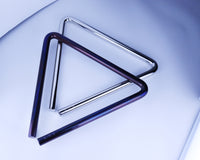
DThe triangle from the second measure of is E♭If you play it thinking it's one note in the dur chord, I think it will blend in well. You can choose any note, whether it's a tonic, a third, or a fifth, and try playing while thinking of it as the constituent notes of a harmony.
HMake sure to clearly emphasize the grace note on the snare drum in measure 8. It has the same movement as a wind instrument, but it climbs up to the front in 16th notes,HFrom measure 8 onwards, it becomes a descending shape.The grace notes on the snare drum have the role of making this descending shape stand out, so try playing it clearly.
I think it's interesting to play the crash cymbal in the last measure with the impression that it will end first. There are various tones, and the possibilities are endless, depending on the player's imagination, whether it leaves a reverberation or not, whether it is a bright sound or a dark sound.
Imagine various patterns and try playing them.
Ⅲ march『Memories Refrain』/ Shion Ito
I think it would be nice to play this song with the image of a march that makes you move forward, a march that gives you hope, a march that makes you feel positive, or a march that makes your heart feel lighter, rather than a march for walking.
This march is about hope and freedom, and everyone is approaching something like that, rather than a rush, it's about having positive feelings, but it's not allegro, which is strange, isn't it? By keeping this feeling in mind, percussionists should play at a tempo that allows them to move forward comfortably.
Be careful, as there is a big difference between the tempo of forcing someone to walk and the tempo of moving forward comfortably.
When you think of it this way, it becomes a soft rhythm rather than a strong rhythm. Therefore, the choice of snare drum and sticks is important.
I think it's best to use a snare drum with a light sound, and find a light stick such as maple, or a slightly heavier stick that makes you want to play in a bouncy manner, rather than hitting hard.
When I play with light sticks such as maple, in a sense I lose the soft sound, and on the contrary, it becomes aggressive, so it is important for everyone to try out various sticks.
The bass drum and cymbals also don't sound like Rachmaninoff or Tchaikovsky, so instead of deciding only on the percussionists as before, in this song, the snare drum should be decided together with the horns, and the bass drum should be decided together with the tuba, baritone saxophone, and other low-pitched players.

I think wind instruments can be played comfortably if you imagine a comfortable rhythm when playing the snare drum, bass drum, and crash cymbal.
COn the 3rd beat of the 2nd measure, try playing with the impression that it stops for a moment.
GI thought the snare drum one bar before was really cool.
There is an accent on the first beat, but if you make sure that the note after the accent doesn't become too quiet, and the 16th note on the first beat comes out a little stronger, you can hear it clearly.I think that in order to play comfortably and sharply, by swinging your arms wide, you can make the sound clear and clear.
Ⅳ Rhapsody~Eclips / Michiru Oshima
I think if you create this song with more expansive sounds, like a wind ensemble, you'll be able to create a worldview.
Make sure to play the bass drum with a deep tone, both fp on the second beat of B and the first shot on the second measure.
BIt is best to play the timpani in the second measure with a wide and deep sound (taa taa taa), waving your arms wide.
CFrom then on, I played excitedly, imagining that I was moving forward one by one, and the big drum at the 31st and 33rd measures.『zoon』Let's imagine a deep sound like this when playing.
DThe feel of the phrase changes a lot with the triangle, so I think it's nice to play with the idea of changing the feel of the phrase.
EI think that if you play one phrase in two measures, you can create a wide range of phrases and flows.
EI think it's best to play the glockenspiel in the fourth measure with the image of fireworks exploding and sparks scattering. Be careful not to create a glare.
FLet's play with an exciting image of two measures and one phrase.
GI think it's a good idea to play with the impression that when you enter, you've entered a completely different world from the one you were in before.

For the crescendo and decrescendo of the final triangle, think of the area from your elbow to the tip of the triangle beater as one stick, and play by waving your arms widely and gently.
I think it's a good idea to choose a triangular beater here as well, along with wind instruments.
■Toru Uematsu Profile

Principal timpani player of the NHK Symphony Orchestra. Born in Tokyo, graduated from Kunitachi College of Music and graduate school at the top of his class.
Studied abroad in Berlin as an NHK Symphony Orchestra overseas trainee and studied under R. Seegers.
He has participated in numerous domestic and international music festivals, including the Patras International Art Festival in Greece, the International Goethe Year Commemoration Art Festival, the Karuizawa International Music Festival, and the Miyazaki International Music Festival.
A master class was held at the University of Singapore.
As a soloist, he has performed works by Takemitsu and Glass with the NHK Symphony Orchestra, and was selected as the 2020 NHK Symphony Orchestra Best Soloist.
There are also many collaborations with artists from different genres, such as Eitetsu Hayashi and Yosuke Yamashita. He has been researching the relationship between young children and music from the perspective of percussion instruments for many years, and considers his life's work, ``Taiko Ensemble TomTom'', to conduct concerts at kindergartens and special needs schools all over the country.He deepens musical exchanges with children across the country through various activities such as ``Otomo Tsuyoshi Music Caravan,'' which delivers music to children in disaster-stricken areas, ``Toru Uematsu's Shakashakapan,'' and ``Shigeru Muroi's Picture Book Live,'' which reads picture books.
Produced the "Children's Music Festival" at the NHK Music Festival. He has also appeared on many ETV educational programs such as Pytagora Switch and Musica Piccolino.
執筆者:パーカッション・シティ 川原
取材協力:NHK交響楽団首席ティンパニ奏者 植松透
編集:JPC MAG編集部