THINGS
All 2026JapanBrass band competition one-point lesson

Every year!
Toru Uematsu, acting principal timpani player of the NHK Symphony Orchestra
We asked him about his approach to playing the assigned songs!
Mr. Uematsu's unique interpretation may make playing the assigned songs even more fun! ?
Interview: Percussion City Motoyama, Kawahara
No. 1 “The Hill of Sunset” / Shiki Moriyama
First, the crash cymbals in the third measure have a mark that stretches the sound and is written as forte, but you need to think about how to play this.
At that time, the teacher will probably say something like ``soft'' or ``full,'' but if you don't have that ``full'' feeling within yourself at that time, there's nothing you can do about it. The only thing written in the score is to stretch it out with a forte, so I played it faithfully.
In that case, I have no choice but to play on the forte. There's nothing wrong with that, and that's fine.
Where did the idea that he felt this way, then he should do it this way come from?
That means it's running.

When you see something in your daily life, you feel something. We are currently in the middle of spring, the cherry blossoms are in full bloom (coverage date: April 1st), and other trees are also starting to bud. It means that you become very interested in the seasons and landscapes that change day by day. I think spring opens up a lot of spring interest, and I think spring has a spring sunset glow, and summer has a summer sunset glow. So, is this a summer sunset? Is it a spring sunset? When is the competition going to be held? I think these stories will change your image of sunsets. This doesn't mean producing the sound of the sunset you have in mind, but the sound you have in mind now may change in the summer. That's because the seasons change. The surface temperature of our bodies changes, and there's a lot of pollen flying around right now, so I can't do any activities at all. Including such things, many things can look different depending on the season, depending on the time, and if you are interested. It's really fun to think about what kind of sound a particular sound might be. You don't need any experience to do this, so please be interested in various things and try to find hints from them.
Of course, it is very important to receive advice from an advisor, but more
In the process of trusting our own sensibilities more and practicing creating each sound on our own, there are times when I feel like I want to make a certain sound but I can't.
I think it's important to think about how you can make the sound you want when you can't make the sound you want right now. At that time, you will need a different source of information, which is a technical thing. For example, if you're playing a cymbal, it would be a good idea to ask your advisor about the little techniques involved, such as if you hit a cymbal here and here, you'll get this kind of sound, or if you hit a little here and here, you'll get a similar sound. In the process of being taught by an advisor, I think you will realize that there are many techniques that I don't know about, such as this and that. But when you can't get the sound you want, the most important thing to do is listen to a lot of songs. If you have an image of the sound you want, please go and listen to a concert.
It doesn't have to be this song. What's important is that the song features cymbals. I'm chasing cymbals in the evening light, but when I actually go to listen to them played, I realize that cymbals have a variety of sounds. If you do that, you'll understand that you shouldn't make cymbal sounds just thinking about the sunset. When you actually go to listen to it, you'll find that there are sounds that are more interesting than you imagined, sounds that are more wonderful, and sounds that will make you cry. It is important to have a lot of interest in getting information and emotion from actual music. By listening to various performances, the range of tones of the cymbal instrument will expand. I think you'll gradually come to understand that the sound of the sunset will spread out even more, and that's what's most important. I want people to find lots of hints about things like that in their daily lives and expand their sonic images.
Of course, this is not just about the cymbals in this song, but is common to all instruments, all songs, and all scenes. Try to have as many sounds as possible within yourself. Let's listen to a lot of performances, not just the songs we play. This work never ends. That's what I continue to do as well.
A Regarding the glockenspiel from the second measure, you can hear the d, but let's give each note proper depth so that the mifasolaside doesn't become unheard. Re's
Mi is on top of me, Fa is on top of Mi, So is on top of Fa, and A is on top of that.
It's a good idea to always play with this feeling in mind.

A The way to play the wind chime in measure 4 is an effort to find one among an infinite number of options.
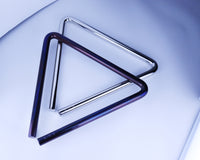
I think it would be a good idea to check it out. Some instruments come with metal drumsticks as accessories, others use triangle beaters, and some use mallet drums.ShaftIt has become commonplace to use the
I think that's the case, but why not try rubbing it with a banana instead of your fingers?
Bananas are softer than your fingers, so don't you think they make a nice sound? (lol)
It's difficult to keep a banana that sounds good without letting it rot until the day of the competition.
(lol) That's why you might not be selected, but try to have that kind of free thinking.
Sho.
Also, there are many types of wind chimes. I am a wig made by my disciple.
I have a chime, but it's just an instrument with a nail hanging from it.
But it makes a really nice sound. However, since the nails are the same length, ascending and descending systems cannot be created. When I thought about playing the wind chime in that way, I thought, ``The most sparkling sound,'' or what does it mean to use a wind chime here?
I'll reconsider. In other words, the composer is also approached from the performer's side. It might be a question of how to make a single sound well, but let's get creative and think about what kind of wind chime sound would match this scene.
There are probably more ways to play the tambourine roll that starts on the fourth beat, three measures before C, other than shaking it or rubbing it with your fingers. That's something we always want to know, and the first thing we do is try using the classic techniques that everyone knows. I tried shaking it. “Gah!” I tried it. I tried "Shut". At that time, when I got into that beat and thought it was perfect because the peak was firmly forte, I started thinking about whether this is the right way to play the tambourine. Of course, that means changing the instrument or changing the technique, but when you think about what the meaning of this tone appears in this scene of this song, you have to get the feeling of the tone based on the meaning of the song. In that case, playing with a banana as mentioned earlier doesn't necessarily have to be a banana. In this way, the members work hard and come up with as many interesting ideas as possible. I create a single sound while imagining things. I understand that it would be better to use your thumb for this situation, but if you do it with your thumb, it might end up being a bit violent. I think this will give you an opportunity to think hard about whether it will end up in your thumb or your middle finger. To be honest, I don't know what to do with the wind chime or the tambourine in this scene. But that's actually the start. What's most fun is trying to find it on your own. Try out various playing techniques with your friends, and have fun playing with pride and confidence in the sounds you've discovered together.
E The small drum in the 4th measure is a 16th note, but since the rhythm from the 5th measure is the main one, even when the tempo reaches 126, it does not take the lead, but instead moves from the saxophone to the trombone to the tuba. It is important not to disturb that flow. Since the main character is the melody, the tenor saxophone and alto saxophone phrases create a single flow, but I think the large drum has the role of expanding the range and creating a three-dimensional feel. The role of the large drum is not only in rhythm, but also in widening the range and range of low and high notes.
If I were you, I would be a little hesitant about the timpani solos in measures 48 and 49. I can't go all out with fortissimo, or rather the music is beautiful so it's not like it's a fight scene. For example, when someone asks me to fight, I feel like I don't know what to do, but even if the flow becomes faster, rather than creating something more intense, I think the flow and range will expand, so I think it would be great if you could play 16th notes while imagining the beauty of this solo.

No. 2 "The Guards"/ Takashi Hoshide
The roll technique is often used when playing the snare drum from the head. There is no tenuto in the sheet music for the snare drum, but there is a tenuto in the sheet music for wind instruments. Of course, I think we should be conscious of tenuto when playing wind instruments. Since it is not a tie, it is called tenuto to leave as little space as possible when striking again. I think it's important to imagine that the sound should be extended as much as possible, rather than connected by tonguing like other wind instruments. Therefore, I think it would be better to have the same volume without adding an accent.

A Regarding the timpani from before the 7th measure, I think it's heavy throughout the song, but not heavy. In my opinion, it's more of a serious song than a heavy song. However, it doesn't have to be that serious, and I think it's fine to use the volume at just the right level within the flow of the phrase, as if you were playing along with the double bass or tuba, rather than in a "solo!" way. However, it wasn't enough for just one person, so I just added the tuba and contrabass myself. I think it's a good idea to play relaxedly, not with a solo that has nothing to do with the phrase, but with the flow of the song, something like ``One timpani is playing as much as three or four people.'' On the other hand, it's easier to play powerfully and clearly. But instead of that, I think it's better to play in a way that allows you to easily flow from one thing to the next, rather than making a decision.

The snare drum from B has a thicker sound due to the addition of a flam. It's not strange at all without the flam, but by intentionally adding a flam, the sound is bright but also has weight and depth. So, rather than playing lightly, it feels like it's added to make the sound heavier. Try playing with the idea that by adding the flam, you're expressing a sense of heaviness.

From C onwards, the cymbals and large drum will be the backbeat, so I want the beginning note to have a sense of weight.
I feel like this one is also conscious of British-style music with a sense of pomp and circumstance. It's the same with pomp and circumstance, but I want the back to go to the front, and the front to go to the front. In marches like this, I would rather sing than march forward. A sense of tension is created when what you want to sing and what you want to go forward collide with. However, with this song, I wanted to avoid creating any sense of tension as much as possible. If the person in the back moves forward too heavily, the rhythm becomes quite heavy and there is too much forward momentum. It is important not to overdo it, but since it is written in the score like this, if you keep this in mind, the people who want to go to the front and the people who want to sing will clash with each other, resulting in a sense of tension. To prevent this from happening, I think it would be a good idea for people who use upbeats and backbeats to practice aiming for a ``march with less tension.'' Also, I think it would be even more fun if you could play with this chighugging in mind.
There are many different types of snare drum sticks, so everyone should try them out. This song is different from the famous Sousa march, and is a relatively calm march, so it's a little different from the military band-like marches that make people walk forward. Similar to Majestic, this song has a melody that makes you want to sing. Sousa's march makes you want to walk, it makes you feel tight, it makes you feel tight. But the tempo of walking is actually quite fast. I think what's interesting about this song is that it doesn't have a walking tempo, and the big drums and cymbals don't create a rhythmic feel like "right, left, left, left!" like a military band. Since it's not a military march, the bass drum mallet is naturally a little softer. In other words, it's not music or sounds that slap your butt and say, "Go! Go!" So, in that sense, marches still have a commanding tempo, so it sounds like a march, but I think it's a little softer, a little louder, and closer to that image.
The big drum from E sounds like "sing, sing" rather than "walk, walk!" like in the story just now.
That's what it feels like. The G beyond that is also a Forte, but the feeling is the same.
During the last four bars, the timpani and snare drum move soloistically. This part is also the end of the song, and it feels a little lively, but it's not a strong and intense sound because there are a lot of accents, but I think that even though it's a march, this song has a strong symphonic impression, so when it ends like this, it's not a painful sound, and you can play it a little more casually, thinking that there are 4 people each on the timpani, small drums, large drums, and cymbals. For example, if four people play one part, the performance will be very rich. It's plump and has a rich sound. Although I am actually playing alone, I feel like there are 4 people playing each part. I think it would come together better if the sound was created in a 4x4 format with four people playing each instrument.
No. 3 “Collect Toys Marcha!” / Shion Ito
This song has a bright tone, so the snare drum is tuned relatively high and the sound line is fine.
When creating the sound, imagine a tight and dry sound.
 As for the stick, I think it's best to use a light stick such as maple. i am the main
From the time I was playing the snare drum to the present day, I have preferred to use light sticks. Nowadays, hard and heavy materials are often preferred, but I think that rather than controlling the sound with the weight of the stick, I control the sound with the weight of my hands and arms. With this idea, a lighter stick is much easier to use. I am often asked, ``Does your hand shake when using a light stick?'' But it doesn't necessarily mean that the stick is too light. In fact, if it's heavier, the stick or mallet will fall off without permission. I like tones that are controlled with my hands and arms, so I use light sticks. Since I have control over the dropping itself, I am proud of the fact that it creates my own sound, but there are many situations where I want to leave it to the sticks. This is because, in my opinion, a stick is an extension of your hand. When you change the instrument you use at that time, if you just drop it, the stick will make a sound when you approach the instrument. There are advantages and disadvantages to both. There was a time when I was a student when I mainly used heavy sticks, but ever since I started thinking that way, I've been creating tones with lighter sticks. Regarding the timpani mallet, the KATO timpani mallet I use is actually made of bamboo compared to the KATO timpani mallet sold at JPC.ShaftIt's narrow. It's the same thing as the sticks I talked about earlier, because I want to use a light mallet to create my own sounds. Also, although it is not well known, the red grip tube attached to KATO's timpani mallet is attached to the grip end, and there is a meaning behind it.By attaching the grip tube to the grip end, the back of the mallet becomes heavier. So, just by controlling it a little and dropping it lightly, you can get a good sound. But this won't work if the back of the timpani mallet is light. If the grip tube is attached to the grip end, the drumsticks will not hit the hitting surface until the very end. This is not what I was talking about earlier, but since the head of the mallet is too light, it won't produce much volume, but if you compensate for the volume by playing with your hands and arms, the meaning of this grip tube becomes clear.
Next, since this song is a march, there are a lot of notches throughout, but for example, one measure before E is decided with fortissimo, and then starts again with forte. Not only in this scene, there are other beautiful melodies in the woodwind, and there are also roles shared. So, if you think about things like that, I think you can come up with a lot of different ways of thinking. I don't think you need to think too much about using percussion instruments to make decisions, but I think you need to discuss with the conductor and members how to play when you need to make decisions using percussion instruments.The song doesn't end one measure before the E, but it doesn't end. Therefore, it is important not to make that decision the ending sound of the song.
After Trio, Glockenspiel comes in from G. It has the same melody as a wind instrument, so it is very important to sing it in the same way as a wind instrument. To match the articulation with a wind instrument, first try playing an instrument that plays the same melody, such as a piccolo or flute. There doesn't have to be any sound. It's really wonderful to think about breath usage and articulation together. Conversely, if you ask someone playing the same melody to play the glockenspiel, the flute players will hit the glockenspiel with the image of a flute, and the same goes for the snare drum, where the trumpet player will play the small drum with the image of a trumpet. Even if the rhythm is the same, people who play percussion instruments and people who play trumpet may feel the rhythm slightly differently. The rhythm we feel at such times is actually two-dimensional. But trumpet and flute players play the rhythm very melodically. That's all you need to do to find a difference. Therefore, I think it would be a good idea to try playing a wind instrument yourself and try to understand the feelings of the wind instrument players even a little bit, or have the wind instrument players play the glockenspiel and listen to how your friends play the melody.
The cymbal solo in J's Auftakt is just so cool! I was
There's an eighth note after that. The thing to keep in mind here is that if you focus on stopping the sound, you will fail. It's very difficult to play the sound ``Jaan!'' and the next note ``Jah!'' side by side, but you should be more conscious of the previous note labeled ``solo,'' but strangely, there are times when after playing a solo, the moment when you play the next note is delayed, causing trouble. In that case, I think it's better to concentrate on the first solo and not do the second one. Of course, it is very important to play all the notes well, but by focusing on one note, you may end up neglecting the other, and I don't think it's a bad thing if both are half-hearted. I think it will make you feel a little better if you can create a good sound even if you give up one or the other. For a moment, try playing only the solo sound without playing the eighth notes. Once you are able to produce a solo sound that you are satisfied with, try playing eighth notes as well. I think this kind of practice method is also effective. But one day, this kind of rhythm suddenly becomes possible. It's surprisingly interesting if you try to think about it first by focusing on one or the other.

Two measures before the M, there are grace notes on the timpani and small drum, so be sure to match them carefully. If you follow the same procedure for the grace notes on the small drum as for the timpani, try doing both in a single manner, as this will increase the possibility that the effect will match perfectly with the timpani.
Regarding the timpani after the M, there is no accent behind the fourth beat, but let's play so that the notes other than the accent are not buried. If you try to make the left hand (the second note) stronger than the right hand, the phrases will naturally sound clearer.
No. 4Finale for wind instruments” / Yasuhide Ito
The image of the song is really cool! Overall, I have the impression that the tempo is very fast, but it's also very melodic, and although it may not sound like that, I feel that it's a very calm song. I have the impression that there is a detailed melody, but the overall flow is very large. It's not a very fast song, and it's a big two-beat song rather than a four-beat song. There are various small passages within it, but I think it's really important to visualize the big flow as a whole.

There is a sforzando on the timpani and bass drum in measure 7, but let's play in a similar position to make the most of the sound and harmony of the wind instruments. The image is of a wind instrument blowing a short sforzando, but it's not an accent. Wind instruments are expressed by tonguing, rather than dots. When thinking from the same standpoint, it is important not to think only from the perspective of percussion instruments. How much of the sforzando part do I play in the overall sound? The dot is also a unique weapon of percussion instruments that other instruments do not have. If you hit the timpani too, you'll hear a ``don'', but after that, you'll hear a pitch. Other instruments play A as A and G as G, but the timpani is also played as G, but at the beginning there is a striking sound that sounds like "Don!". That "don!" hitting sound is the core of tutti. The presence of timpani in both orchestras and wind bands disrupts the pure harmony, but the addition of the timpani has the effect of tightening up the whole thing. Wind instruments are amazing! Adjust the shape of the sforzando. Our role is to make the shape sharp, to make it mellow, and to decide how to shape it. The sounds of the other instruments were well embedded within the sounds of the timpani and large drum. Since this is the core part, it is important to use your ears to determine the appropriate balance.
For the trumpet and small drum from B, keep in mind that the small drum is not the main character, but that different instruments are playing the same phrase, like in ``trumpet and small drum.'' Actually, the trumpet and the small drum go well together. To clarify the rhythm of the trumpet, a small drum and
Musical instruments are extremely important. However, if the small drum becomes too noticeable, it becomes a rhythm rather than a phrase. I think this scene has an effective sound even though it's not a rhythm or anything. I think it's good to think of it as playing the resonance rather than the rhythm.

When playing the snare drum after the 30th measure, be sure to play so that you can clearly hear notes other than the accent. Accent is just something you add to the original sound.
When practicing, keep in mind that you are not adding accents and subtracting other sounds.
Sho.

For the F suspended cymbal, try using various mallets with the band. For example, rather than a mallet wrapped in cloth or leather, it's more like a hard marimba mallet. It's also a good idea to have everyone in the band take a majority vote. I'm not just a percussionist, but I'd like to ask people on other instruments, which one is better: mallet number 1, mallet number 2, mallet number 3, or number 4? It's fun to do this step by step, and it creates our own sound. When a trainer comes to give you a lesson, it's a bit annoying when he asks you to play with this mallet. As a band, you might think it's easy to say, but if you try out the mallet your trainer told you to use, you might find it surprisingly good. When a trainer tells us that we like it, we don't just use it, we say, ``That's just a trainer,'' or ``I like this mallet,'' or ``What do you think?'' but that's because we thought about it ourselves first. It's also fun to think about it together, and there's another meaning to it, so I encourage you all to try it out.
The tom-tom in measure H11 is specified as a mallet, but I think a timpani mallet would be fine.
I'm here. In short, I think it's a soft mallet. If it says mallet, that's what I do. If the shaft was a wooden mallet, it wouldn't feel that different from a stick. As for musical instruments, I think the sound is a little thin if I use a single-head TomTom, so I think it would be better to use a double-head TomTom. The head is coated and has a jazz drum-like feel, which makes it easier to pronounce sounds, so I think it fits well.
There are timpani and small drum notes from the second measure of I, but this is where I want some driving force. In order to create momentum, we often hear words like "incite", but I think it's more important to have the mindset to move forward rather than incite. For example, if a drum set and bass start together by counting "one two three four," it is not inciting. When I say agitate, I mean I'm trying to get ahead of what I'm hearing, but I think ignoring what I'm hearing and trying to hold on to what I can hear is not so much agitating, but rather a peaceful push rather than a forceful push. That
I think it's good to play with this in mind.
There's a timpani solo from measure 140, but the melody is mostly white.
For something like a chorale, the rhythm is very detailed. I have the impression that it is similar to Shostakovich and Prokofiev's songs, and Prokofiev has many scenes like this. The important thing is the melody
This means that the concept itself is unwavering. There are many things that are brought on by those around you.
It's a slow yet gorgeous melody. The power of what lies in the middle
In response to this, a timpani solo comes out and a cha-cha is added from the side, but it loses to the traditional melody. Rather than losing to the royal road, it means that you should not win the royal road. Although he is very effective at enlivening the music, his purpose is simply to enliven the classic melody, and he is not the main character. I guess my role is to stand one step behind them and say, ``What's going on?'' It is very important to know whether you are in the first position, third, or sixth. It's the same for all musical instruments as musical expressions. Instead of just blowing the forte like, ``Dah!'', when you're in the front, you have to play as if you were the first, and if you play in front of the first even though you're the third, it can sometimes get in the way. Timpani phrases like this tend to get in the way. This is also technically inflexible, so I end up going to the front. It is important to be conscious of the fact that although you are trying to liven things up, you are not the main character. This sense of balance is very important for percussionists, and it doesn't always come to the fore. In the end, I don't know, but the way I try to figure it out is to think about what other instruments are hearing when I play. The good thing about not having to hear it as a song is that you can just hear your own sound, and that means the timpani comes first. However, in reality, there are almost no such situations, and most of the time I listen to someone else's music and play along with it. Like I said earlier, you can provoke it or whatever, but the premise is that you can hear it. Sometimes the conductor will point out to me, ``Can you stop listening to that and listen to that?'' When I do that, I realize that my role, although I thought it was here, is actually my role, through meetings with the conductor. Depending on where you listen, the loudness and timing of your performance will be determined. Actually, this isn't a problem, it's just a matter of whether you can hear other performances properly. More specifically, it's important that when you hear the sounds of other instruments, you can sing them properly and understand the harmony. I think it's really important to play while listening. Especially with the timpani at the end, I was listening closely to the other instruments, and the timing and volume meant that I was being heard. I think other people try to keep the tempo in a sense, but in that case, the timpani harmonizes beautifully with the wind instruments, and if they are moving smoothly, these people will slow down. Even so, I think it will lead to a good performance if you play while thinking about creating a beautiful rhythmic connection that will not slow you down.

■Toru Uematsu Profile

Principal timpani player of the NHK Symphony Orchestra. Born in Tokyo. Studied abroad in Berlin as a member of the NHK Symphony Orchestra, where he studied under R. Seegers. In addition to his orchestra activities, he also participates in numerous music festivals and workshops both domestically and internationally. As a soloist, he has often performed with the NHK Symphony Orchestra, including works by Takemitsu and Glass, and was selected as the NHK Symphony Orchestra's annual best soloist.
The other day, the Aichi Chamber Orchestra performed Walker and Daugherty's Percussion Concerto (bothJapanPerformed together for the first time. He has also been researching the relationship between young children and music from the perspective of percussion instruments for many years, and runs the Taiko Ensemble TomTom, which visits kindergartens, special needs schools, and disaster-stricken areas across the country to develop musical play activities with children. He has also appeared on many ETV educational programs such as Pytagora Switch, Musica Piccolino, and Ongaku Bravo. Currently, he has moved to the mountains of Tokigawa Town, Saitama Prefecture, and is exploring ways to create fun and soulful music through interaction with local people and children in the rich natural surroundings (he also grows rice...using no pesticides, planting by hand, and harvesting by hand!).
執筆者:パーカッション・シティ 本山、川原
取材協力:NHK交響楽団首席代行ティンパニ奏者 植松透
編集:JPC MAG編集部