THINGS
FY2024 AllJapanOne-point advice for the percussion section of a wind band competition piece

Just before the competition!
We asked Toru Uematsu, principal timpani player of the NHK Symphony Orchestra, about his approach to performing assigned pieces. After reading this, your playing might change completely?
Interview: Percussion City Motoyama
Ⅰ March “Raising the Flag of Courage” / Kimiyasu Toguchi
The first beat of the fourth measure is the prelude, and the third beat is the start of the melody, so rather than lowering the volume, it's a good idea to change the tone and atmosphere while keeping in mind that this is the start of the phrase without dragging down the momentum of the prelude.

The cymbal isAThere is no note at the beginning of the line, so I actually stop it, but if I play it thinking that there is a quarter note written in my head, I think it will become a beautiful half note. Don't be too conscious of the fact that it's a rest, and play with the feeling of moving forward.AThe same goes for the half note in measure 8.
The glockenspiel isBMeasure 7 “C, B♭,A,C,B♭"B"♭Since A is a semitone, the moment you play A is the most muddy sound. With wind instruments, the previous sound does not remain, so you can use your own sound (B♭) will remain. Well, it's not about stopping it, but are you listening properly to the muddiness? That's what it means.
If we compare the relationship between these two sounds in terms of volume, B♭If it's louder, the sound will be mushy and muffled when you play A, so it's better if A is a little louder. B♭I wonder if it's to make the A more clear... Rather than paying attention to the volume, I change my touch when playing, and the result is that it sounds just a little louder.
Make sure to sing the following phrases as well.
The first one is “C♯”The next one is “C”, right? Sing the "C" loud enough to make it clear that it is a semitone lower.
First, try singing the phrase. Find out how to sing to make it sound the best, and then think about how to express it on an instrument. Does your instrument produce the sound that matches your singing style? If not, how can I get the tone I want? If you play with this awareness in mind, and if you just play according to the score without thinking, you will end up with a completely different performance.

If I were to play the snare drum for this song, I would use a narrow maple stick with a small round tip. I think it would be too much to insist that it is a hard material.
GThe cymbals should not make a loud "Jang!" sound. The orchestration is thin, so you don't have to worry about volume. Play in such a way that the whole part is wrapped in an oblate so that you can clearly hear the drop in the second note.
This is not the only point, but just being able to make a cymbal sound loud is not the only thing that is good. Don't just look at the dynamic symbols, but also think about what kind of volume and timbre is required in the situation as you play.
KI think the roughness of the snare drum should be a little larger in the front. Until now, the song has been played so beautifully that you'll wonder if it's really a march, with the wind instruments playing the main role, but at this moment it really tightens up. This is where I bring the hardest sound in this song. From this point on, it's a "light march" in which percussion instruments form the core of the whole piece. Instead of focusing on the volume, try to lead with a comfortable rhythm that allows everyone to march along and play.
Ⅱ When the wind sparkles / Noritaka Kondo
For the bass drum in the second measure, how can you make the instrument resonate richly, and how can you create a sound that is close to harmony? Support or envelop harmony. It's not just a "don!" sound, it's a "boom" sound. So what kind of sound is that? Is it an unpleasant sound like the outdoor unit of an air conditioner, or is it like the wind blowing into a cave?
I think it's a good idea to think of the bass drum as the addition of the bass drum to the harmony of the wind instruments, and its role in determining what kind of scene the harmony will be.

The same goes for the timpani in measure 5, so why isn't it just the bass drum this time? "B♭When the timpani enters "dur", it becomes "really calm B.♭It becomes "dur".
The role of percussion instruments is to create music that allows you to add words such as ``really calm'' to the harmonies. It's a good idea to play while imagining something like that.
Regarding the wind chime at the end, for example, if it were a harp, the sound would start from this sound, go up to this sound, then come back. But if it's a wind chime, it would be written like this, right? That's why, instead of starting at the top, going to the bottom, then returning to the top and repeating, let's think more freely. Where should I start? How far do you have to go to get back? Where next? Try researching and imagining a glissando that would suit this part.
Ⅲ Fairy tale / Itaru Sakai
AInstead of trying to match someone else's bass drum, play the one that you think is the coolest, "Do Do Do Don!" It's a bit foreign, and other people listening to it might think, "Huh?"
It all comes together nicely at the beginning, doesn't it? It is an image that completely changes the atmosphere. This is the beginning of music that will suddenly change rapidly.

EI think the tambourine doesn't have to have exactly the same rhythm as the trumpet. The trumpet feels a little more free. That's why I think the tambourine should be played with a more accurate rhythm.
IThe relationship between xylophone and tambourine is the same.
NLet's clarify the difference in the number of bass drum decorations. And this third shot! Wasn't it somewhere? That's right,AAt the end, you realize that this is the sound you played in your head. It may have felt strange at first, but the scene transitions in this song start with the bass drum's "do-do-don!" and end with "do-do-don!" Please be playful and enjoy the changes as you play.
Ⅳ Frontier Spirit / Hirotake Ito
Be sure to pay close attention to the texture that appears here and there, where two eighth notes line up, so that it doesn't become too light. It doesn't mean that everything will be the same, but it will be tightened. It's a march, but it seems like the march sometimes stops at certain points.

CWhen I listened to the glockenspiel part, I thought of country-western banjo playing. Play lightly without being too conscious of matching the rhythm and volume.
The snare drum is unique in that it doesn't have the eighth note backing that normally appears in marches. There are few parts where the rhythm is the same as someone else's, and the image is that of a soloist who continues to beat melodiously by himself. In some parts, there is a light image of whistling like a piccolo solo.
Play expressively in your own way.
■Toru Uematsu Profile
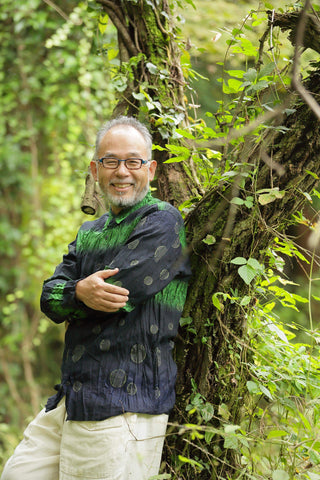
Principal timpani player of the NHK Symphony Orchestra. Born in Tokyo. Studied abroad in Berlin as a member of the NHK Symphony Orchestra, where he studied under R. Seegers. In addition to his orchestra activities, he also participates in numerous music festivals and workshops both domestically and internationally. As a soloist, he has often performed with the NHK Symphony Orchestra, including works by Takemitsu and Glass, and was selected as the NHK Symphony Orchestra's annual best soloist.
The other day, the Aichi Chamber Orchestra performed Walker and Daugherty's Percussion Concerto (bothJapanPerformed together for the first time. He has also been researching the relationship between young children and music from the perspective of percussion instruments for many years, and runs the Taiko Ensemble TomTom, which visits kindergartens, special needs schools, and disaster-stricken areas across the country to develop musical play activities with children. He has also appeared on many ETV educational programs such as Pytagora Switch, Musica Piccolino, and Ongaku Bravo. Currently, he has moved to the mountains of Tokigawa Town, Saitama Prefecture, and is exploring ways to create fun and soulful music through interaction with local people and children in the rich natural surroundings (he also grows rice...using no pesticides, planting by hand, and harvesting by hand!).
執筆者:パーカッション・シティ 本山
取材協力:NHK交響楽団首席ティンパニ奏者 植松透
編集:JPC MAG編集部