From the percussion room of the world
From Percussion Instrument Rooms of the World Vol.26|Stara Zagora, Republic of Bulgaria Atsufumi Ujiie

Enjoying the life of percussion instruments around the worldJapanThe 26th installment of the popular series focusing on people.
When most people hear about Bulgaria, they probably think of dairy products.
This time, in order to dispel that image, we have asked Mr. Atsufumi Ujiie, a percussionist who lives in Bulgaria, to contribute information about the culture and music of each region.
Please enjoy it with lots of photos.
Local information

- Country: Republic of Bulgaria
- Region: Stara Zagora
- Living language: Bulgarian
- Local currency: Lev
- JapanTime difference: 7 hours (6 hours during daylight saving time)
◇ ◇ ◇
My name is Atsufumi Ujiie and I live in Bulgaria. I visited JPC for the first time in over ten years (!), which I had not seen since I graduated from university, and I am very humbled to be writing this article.
It has been over four years since I started living in Stara Zagora, a town with a population of about 130,000 people, about 200 km from the capital Sofia. Currently, I am enjoying this music while performing in the opera orchestra. There are still many things I don't know, but I'm enjoying life in Bulgaria, which has a deep culture, to the fullest every day. There are many things I would like to introduce about my life in Bulgaria, but this time I would like to focus on things related to music and percussion instruments around me.
●Opportunity to go to Europe
So far, I have traveled to England and studied abroad in Italy.JapanI traveled back and forth to Europe, but the reason I first went to Europe was to learn about the ``pipe and taber,'' an instrument that has been passed down throughout Europe since ancient times and involves playing a flute with one hand and a drum with the other at the same time.

This instrument has been useful as an accompaniment for dances because it can play rhythm and melody on its own.
Many of the masters I have met so far are well-versed in dance, regardless of their country, and I have always learned how much the performance changes depending on whether or not they understand the dance.

In addition, pipes and tabers are not traditionally used in Bulgaria, and no one at the opera house where I work was aware of this instrument, but I occasionally play it at performances inside and outside the opera house, and I have been introduced to it on TV.
●Bulgarian steps and rhythms

Before I started working in Bulgaria, Carlos Mas, a Catalan pipe and taber master, advised me to ``dance the local dance no matter where you live.'' That stuck in my mind, and when I came here and met the members of the folk dance team at Stara Zagora Town Hall, I had no hesitation in asking them to join.

Bulgarian music has a lot of time signatures such as 5 time signatures, 7 time signatures, etc., and it is full of mixed time signatures, such as 9 time signatures as well as rhythms like 2+2+2+3. As a beginner, I often struggle with these rhythms, but I'm always amazed at how easily my team members, who have been familiar with these rhythms since childhood, take the steps so easily.
●Folk dance team practice and performance
The dance practice location is the lobby of the town hall.
It is held twice a week, usually on Mondays and Wednesdays, from after 5:30 p.m., when the office closes, until 7:00 p.m. I attend on days that don't overlap with opera evening performances or rehearsals. It's about a 5-minute walk from the opera house where I work, so I often go there directly after work.
The results of daily practice will be demonstrated at events in Stara Zagora and nearby villages, as well as performances in Bulgaria and abroad!


●Bulgarian drum “Tapan”
The drum called "tapan" is essential to the rhythm of Bulgarian music and dance!

Besides dancing, there is one other thing I wanted to do while living here. This is the Bulgarian bagpipe "gaida". When my gaida teacher, Mr. Krasimir Panchev (Kurashi) teaches gaida, he not only plays the gaida, but also shows me the appropriate tempo for the song by playing tapan and demonstrating dance.
In Bulgaria, many folk instrumentalists can also sing and dance.

Tapan is played on both sides using drumsticks with different shapes on the left and right sides.
They are said to be sturdy because they sometimes ride on tapang when dancing. He actually rode it and showed me it.

●Instruments in traditional events
The other day, a Kukeri festival was held at Stara Zagora, so I would like to introduce it a little bit.
People wearing furs and masks and wearing bells of various sizes parade around to scare away evil spirits with their scary appearances and the loud sound of the bells, and tapans and gaidas were also active here.


Also, during the Shinto Festival held in January, there is a custom of going into a cold river, where they dance while playing the tapang and gaida. I'd really like to go, but in recent years there's been a ballet tour from December to early January, and it overlaps with that, so it hasn't happened yet. Mr. Kurashi sent me some photos from when he performed this year, so I would like to introduce them to you as well.

●About work and life at the opera house
So far, I have introduced music and instruments unique to Bulgaria, but the orchestra at the opera house where I work mainly plays classical music such as opera and ballet.
Although it varies depending on the time and program, performances are held about once or twice a week, and sometimes rehearsals are held only in the morning, sometimes only in the afternoon, and sometimes in both the morning and afternoon. The basic number of working days is 5 days a week, but in reality there are weeks when you don't have to work for even 5 days.
Most parts of Stara Zagora can be reached on foot within 30 minutes, and many of my colleagues live close to the opera house. Therefore, many of my colleagues go home once between morning and afternoon rehearsals. It is about a 15 minute walk from my home to the opera house.

You are also surrounded by nature, with lakes, mountains, and forests within walking distance. These people love walking, and if they have time, they invite each other to go for walks.
In my case, I spend my days relatively leisurely: if rehearsals end in the morning, I go dancing, if I have free time in the morning, I go for a walk, and if I have rehearsals in the morning and afternoon and don't have to go home, I practice gaida at the opera house.

Many people walk in this park.
Also, what surprised me when I came here was how many breaks there were during rehearsals. At first, there will be a 15-minute break after one hour of rehearsal, and then a 15-minute break for every 45 minutes of rehearsal. At first, there were times when I thought, ``It's time for a break!'', but now I find myself thinking, ``I wonder if it's time for a break yet...'' before 45 minutes have passed, so it's strange (lol)
There are many outdoor performances in the summer, and for the past two years, as mentioned above, I have been on a ballet tour in the Netherlands and Germany from December to early January.
●About musical instruments in the opera house
The instrument I mainly play, the timpani, is German style. It seems that German style is the mainstream in Bulgaria as a whole, not just in our opera house.
There are now four timpani, but until recently they had been playing with just two for decades.

Instruments are often ordered from countries outside Bulgaria, such as Germany, the Netherlands, and Austria. Unfortunately, it is rare to be able to try out any instrument or mallet before purchasing.
Also, since we are far away and cannot easily send it in for repairs, we or the opera's technical staff do it as much as possible.
When Adams had a problem with his bass drum during the winter ballet tour, I was fortunate enough to be in the Netherlands, so I was able to receive direct help from him.

Approximately 30 performances will be held at theaters of various sizes, with two people playing all instruments.
●Conclusion
The reason why I visited JPC for the first time in a while was because, as mentioned above, I was asked to help with a mallet by a colleague who was unable to easily go out to buy musical instruments.JapanThey were very surprised when I told them that they can actually see the instruments and drumsticks and choose the sounds they produce.
I am currently living a peaceful life here in Stara Zagora, surrounded by nature and music. I am grateful that I am blessed with the people around me and that I am able to spend my time without any difficulties despite living overseas.
As I was writing this article, I realized that if only JPC were here! You may think so, but you shouldn't ask for this or that.
life and musicJapanI would like to continue to immerse myself in the rhythm of Bulgaria, which is a little different from that of Japan.
Announcement
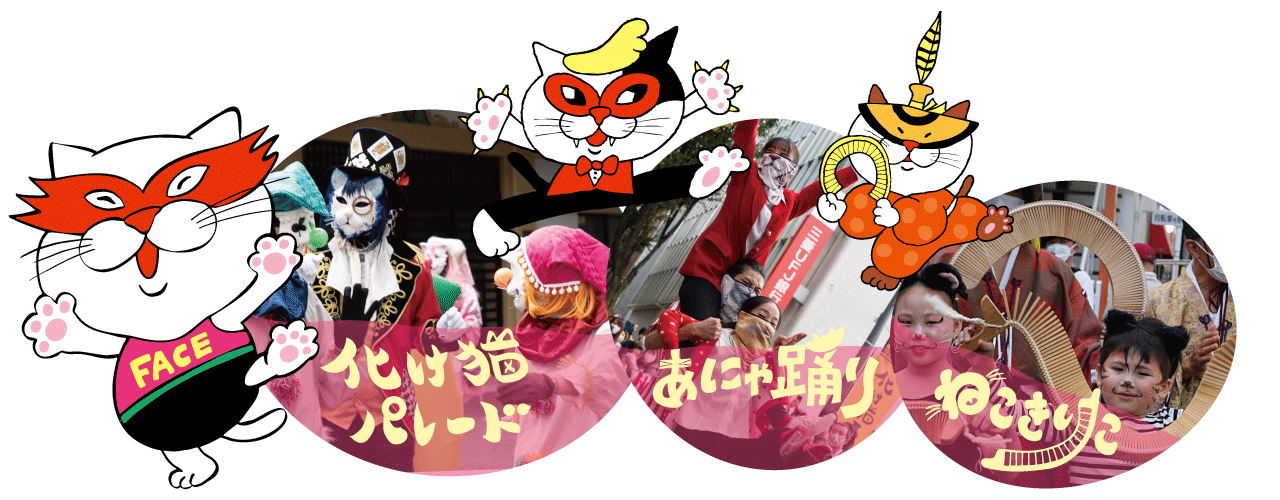
Held every fall in Kagurazaka,Kagurazaka Monster Cat Festival↗️" playing pipe and taber in the parade.
We are always looking for participants. Beginners welcome!
Latest informationJapanOn the Pipe & Taber Association page:https://pipe-tabor.jp/↗️
Atsufumi Ujiie Profile

While studying at Kunitachi College of Music, he learned how to play the pipe and taber at the Oxford Chalemy Summer Course as a domestic and international training scholarship recipient. Graduated from the Municipal Conservatory of Milan, majoring in early music and recorder. Completed the 20th Century Chamber Music Training Course at Teatro alla Scala Training Center in Milan. Received a scholarship from the same training institute. As a soloist, he has performed with orchestras such as the Italian premiere of D. Rivas's Suite Sayaguesa with the San Giovanni Bosco Wind Orchestra conducted by F. Suppa, and has appeared at international music festivals such as the British Pipe & Taber International Festival, as well as in media such as the British Broadcasting Corporation, Italian Broadcasting Corporation, and Bulgarian National Television. 2nd place in the percussion category and 3rd place in the woodwind category at the 4th Philadelphia International Music Competition. Together with the Ring Around Quartet, he released the CD ``Frottore - Secular Songs of the Italian Renaissance'' on the Naxos label. Currently principal timpanist of the Stara Zagora State Opera Orchestra.JapanChairman of the Pipe & Taber Association.

執筆者: 氏家 厚文